Do all fishes sleep with their eyes open? Fish do sleep with their eyes open, because they don’t have eyelids (except for some sharks) to close!

Oranda Goldfish Sleeping With Face On The Ground? My
Do goldfish sleep with their eyes open?

How do goldfish sleep. Fish sleep is not exactly like human sleep, though. During the day they move about looking for food, communicating with other goldfish and exploring their environment. Thus, it’s best to keep the noise level down when your fish wants to sleep.
However, the sleep schedule of your goldfish depends mostly on environmental conditions. When goldfish sleep they hover over the water about 1 inch from the bottom of the aquarium. They also sleep sideways, upside down, and tucked in plants.
They do sleep better when it’s dark and quiet, so many fish will sleep at night. Goldfish sleep by resting on the gravel at the bottom of the aquarium during the night. If you keep a light on in the tank, you can train fish to sleep at night, when you sleep, and stay awake.
It’s normal for them to sleep around 8 to 12 hours out of 24 in short bursts, and most fish learn to sleep when you’re not interacting with them. Mostly, goldfish sleep when it’s dark and calm. They only spend the most active swimming period in the middle of the tank.
If you make noise around a sleeping fish, it will startle awake. Goldfish do sleep in their own way. Their fins will move to keep them stable in a certain position and their gills will move.
If you ever find your fish leaning or lying around the bottom of the aquarium, you should know that it. If you noticed your goldfish is less active and hovering near the bottom of your aquarium and there is a slight fade in their color then you can say that your goldfish is sleeping. Goldfish prefer to sleep in the dark and quiet.
You should also avoid leaving your aquarium lights on for more than 12 hours per day. Goldfish usually sleep at night because they like to sleep in the dark and in a quiet environment. Goldfish are fascinating creatures, but it can be hard to tell what exactly is going on inside the fish tank.
It’s normal for them to sleep about 8 to 12 hours out of 24 hours in short bursts, and most fish will learn to sleep if you don’t interact with them. Although goldfish cannot close their eyes, they sleep at night and nap during the day. If you make noise around a sleeping fish, it will startle awake.
Resting in this position helps prevent eye damage and allows them quick access to look around when they need to. They sleep up to 12 hours per day and will calmly hover a little above the bottom of their tank. It is important for a goldfish to be exposed to a consistent day and light cycle.
They do sleep better when it's dark and quiet, so many fish will sleep at night. While animals that are nocturnal sleep during the day and are awake at night, goldfish don’t fall into that category. On average, goldfish sleep for about 8 to 12 hours a day.
How long do goldfish sleep for? Goldfish can sleep anywhere in the tank, but usually they stay in the mid to lower region of the aquarium. The light should not be on for more than 12 hours a day, or fish may not get enough rest.
Do goldfish sleep on the bottom of the tank? They become less active when it is dark, and settle in a particular place and rest. Goldfish prefer to sleep at night when it is dark and quiet.
Goldfish do in fact sleep with their eyes open. The answer to this is simple, yes, all fishes do sleep with their eyes open. A goldfish may decide to sleep near the surface, under a decoration, or even low on the ground.
Goldfish do not have eyelids. Goldfish take short snaps for 10 to 30 minutes at a time. Goldfish don’t naturally sleep at night, like people do.
This is because their brains are very much functioning at a high rate whilst sleeping, meaning they never deep sleep or enter rem sleep as most humans do. On the other hand, goldfish sink to the bottom of the tank during the night, with little movement taking place. This means that they cannot close their eyes, so it is difficult for them to sleep in the traditional way.
The fun fact is goldfish don’t have eyelids so their eyes are open when they are sleeping. So, not all fish in your aquarium would naturally sleep at the same time. However, unlike other pets, they do not sleep lying down or even for a few hours at a time.
A sleeping fish can be stationary but, always upright; You are probably curious about what sleeping goldfish look like. In this article, i’ll dig deep into this question of goldfish sleep.
There are many reasons a goldfish might sleep more than usual, including illness, boredom, or simply the time of day (goldfish tend to rest during daylight hours). Do goldfish sleep with their eyes open? When goldfish rest or sleep, their eyes generally remain in the same position, though sometimes they turn slightly to one side.
Goldfish do not have a dedicated bed to sleep in, nor do they lie down when sleeping. They don’t move from one place to another while sleeping they just stay in one place. No, goldfishes do not sleep upside down inside the tank.
While it may seem weird to us, goldfish, and most fish for that matter do indeed sleep with their eyes open. Goldfish don't naturally sleep at night, like people do. This is down to the fact that they do not have eyelids.
Goldfish only rest when there’s low activity, not only in their tanks but also in their surroundings. It will neither bend sideways for support nor go completely upside down. Goldfish don’t sleep like humans lying on the surface.
They are sleeping, and they can sleep at any time during the day or night. Goldfish can sleep comfortably at the bottom of a tank. Yes, goldfish definitely sleep to get their rest.
Goldfish sleep with their eyes open because they do not have eyelids. The amount of sleep that a goldfish needs depend on the fish itself. Do goldfish sleep in the dark?
Others stay awake the entire night. So ultimately the answer is no, all fishes sleep in different ways. They do not close their eyes because they do not have eyelids.
However, their sleep cycles can be affected by the tank they’re kept in and their surroundings. You will notice that some goldfish take naps in the afternoon. The simple answer is yes!
And they sleep during the day and night. Instead, goldfish become inactive and will hover in one area of the tank. How long do goldfish sleep?
This will help your pet goldfish get enough sleep and maintain its health. They will usually be suspended in the water no matter where they are. While goldfish can’t close their eyes, they do sleep at night and take naps during the day.
Interestingly, goldfish are either diurnal or nocturnal. In fact, some fish may want to sleep at night while others would prefer a daytime nap. As a result, when you go to bed at night, you should turn off the light so that your goldfish can sleep as well.
Yes, goldfish sleep with their eyes open.
Several factors could be contributing to goldfish turning black, including genetics, disease or parasites, and water quality. One reason your goldfish might be turning black is due to its environment.
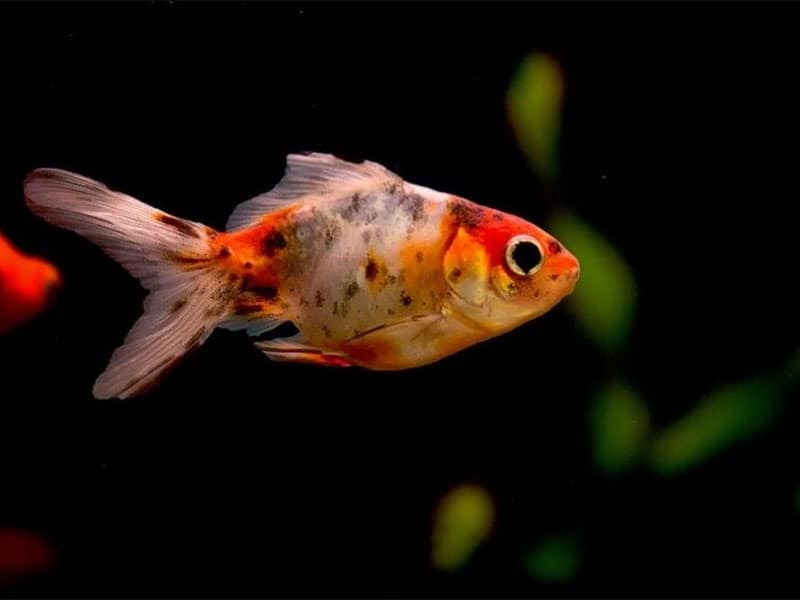
Why is My Goldfish Turning Black? The Causes and Best
The quality of the water depends on the cleaning frequency.

Why is my goldfish black. The number one reason goldfish turn black is due to ammonia poisoning. Some of the causes of a goldfish turning black might be chemical reactions, presence of ammonia in your tank, genetic makeup, environment, stress, or illness. One of the more harmful reasons your goldfish is turning black is also one of the most common.
There are several reasons why goldfish can turn black. Why is my goldfish turning black? Why do goldfish turn black?
Plant debris, uneaten food, and fish waste create ammonia, which is a toxic and harmful chemical. All metallic goldfish start off silver gray, turn black, then slowly fade to a light yellow before their colour deepens to orange or red, sometimes with patches of white. There are many reasons why goldfish turn black.
In fact, any ammonia is too much. Ammonia burns themselves don't show up but, when the ammonia levels drop, his skin heals and affected patches turn black. Contrary to how delicate they might look, fantail goldfish are hardy fishes.
Simply so, why are my goldfish black? The higher concentrations of ammonia can cause gill damage. One of the most common causes and most dangerous cases is due to ammonia in the water.
Ammonia is a byproduct of rotting food and fish waste in the tank, and it can affect a goldfish's skin. Goldfish are naturally gold in color, and if you see black spots on your fish, it usually means there is something wrong. This is sometimes referred to as ammonia burns when it shows up in the coloring.
The fantail goldfish is one of the most popular dishes that are kept in fish tanks. Test your tank often for ammonia and clean it regularly. If ammonia levels get too high and your goldfish is turning black, they may have literally been burnt by the levels of ammonia in the water.
Excessive ammonia in water poses a threat to your fish’s health by burning its gills and body. It’s in essence burning the skin of your goldfish. If your goldfish fins are turning black, you should test for ammonia right away.
Ammonia burns are one of the most common reasons why your goldfish might be turning black. One of the most dangerous causes of goldfish scales turning black or goldfish fins turning black is that your fish are suffering from ammonia poisoning. If your goldfish turned black because of ammonia poisoning, the biggest concern is going to be whether or not your fish makes it.
This can be extremely toxic to goldfish and can. This is similar to the way hair color changes when babies get older. Decaying plant matter and uneaten food can cause ammonia spikes too.
Usually, aquarists can keep ammonia levels very low by simply cleaning the tank on a routine schedule. The most likely culprit of your goldfish developing black spots is ammonia poisoning , which is caused by elevated ammonia levels. Black fins on your goldfish are an early warning sign that the ammonia levels in your aquarium are way too high.
If left in an environment with high ammonia long enough, a goldfish’s body will begin to attempt to heal the damage, creating black patches, even though the. The final reason a goldfish may be turning black is simply because it’s in their genetics. There are a few reasons why your goldfish may be turning black.
Among the most common causes why goldfish turn black include: Some of these things are natural and normal while others should be taken more seriously. As goldfish excrete often, then owners need to.
Due to many reasons goldfish turning black like ammonia burn, water temperature, genetics, and black things around the tank. Check the ammonia levels in your tank to see if you are overfeeding your fish. Ammonia changes are, by far, the most common reason why goldfish turn black.
Why is only one of my goldfish turning black? A black goldfish can be a beautiful adaptation of a species to its environment or a cause for grave concern and immediate action to save the fish’s life. These are the common reasons due to which the goldfish turns black.
Whenever your fish produces waste, ammonia is made. However, don’t assume that your fish is going to die if ammonia has spiked in the tank. Black patches on your goldfish may be a sign that your aquarium is overdue for a water change.
The black spots on their body and fins aren’t the burns themself. What is the reason why ammonia causes the color of black to change? One of these concerns is ammonia levels in your aquarium becoming too high.
One of the natural reasons behind the black spots on your goldfish’s skin can be melanin production. I suspect the heron has picked off the faster colouring. Fish produce ammonia through waste.
Metallic goldfish can start changing colour within 3 months of hatching. Monitoring your goldfish’s behavior and body for lethargy, parasites, and discolorations can help you get to the source of why your goldfish is turning black. Ammonia is the reason why it kills fish.
In many cases, it’s a fatal issue. Your goldfish may also chance colors if your tank is setup in a darker area. Unfortunately, excessive ammonia isn’t visible to the naked eye.
Common reasons why goldfish are turning black. Black is a common color found in goldfish and owners shouldn’t be surprised to see some spots appearing on young fish. Goldfish are known to change colors throughout their life.
Here are some of the reasons why goldfish turns black. Ammonia is actually a very toxic chemical that builds up in your fish aquarium. Ammonia in your aquarium can cause your goldfish to turn black.
And do not let your goldfish have a snail for a roommate. Be mindful of the background and surroundings of your tank. The first thing to do is to check the surrounding.
The prognosis for serious ammonia poisoning is not good. They possess very vibrant colors of red, white, orange and gold. The good news is that when you see that your goldfish turn black could actually be an indication it is doing well.
Goldfish will occasionally start changing colors, which can include producing more melanin or dark coloring, to match their surroundings. Goldfishes are very sensitive and turn black due to the increase in the amount of ammonia in the water. Why is my goldfish turning black?
It can be due to the water quality within the tank. Goldfish are notoriously messy fish. Why is my fantail goldfish turning black?
If you do not change your tank water frequently, ammonia will build up and ultimately burn the skin of your goldfish. Goldfish change colour at different rates.
-
After cats are spayed, it often looks as if their stomachs (and by extension, their primordial pouches) hang lower. The association between ...
-
Depending on your preference, you can choose the most comfortable. Other than that, lice and flea combs can be used interchangeably. 1pc L...
-
Couple Costume Ideas With Dog . Snow white and prince charming check price we all know our dogs really are the perfect companions, so what b...


baseball home plates
Baseball Plates Etsy UK . Baseball Plate Laser Cut Out Unfinished Wood Shape Craft Supply SPT160. Baseb...

